
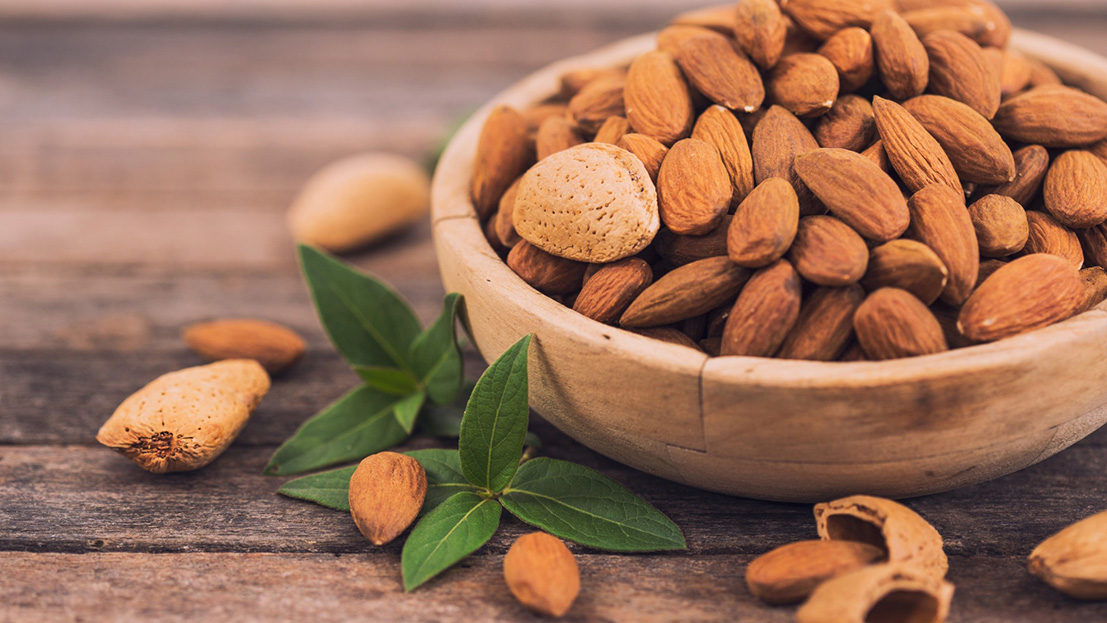
Background
Fun fact: California is the number one producer of almonds worldwide, producing 80% of all commercial almonds.
Almond is a member of the Rosaceae botanical family which includes apples, pears, apricots, plum, cherries, peaches, blackberries, raspberries, and strawberries along with numerous trees and shrubs.
Nutrition
1 oz. of almonds are an excellent source of vitamin E, riboflavin, copper and manganese and a good source of fiber, magnesium, phosphorus, and zinc.
- Vitamin E acts like an antioxidant protecting the body from free radicals which increase your risk of cardiovascular disease and cancer. Vitamin E is also involved in immune function.
- Riboflavin is important for growth and red blood cell formation.
- Copper works with iron to form red blood cells, while it also aids in the absorption of iron.
- Manganese helps the body form connective tissue and bones while also playing a role in calcium absorption and the metabolism of fats and carbohydrates.
- Fiber aids in digestion and benefits weight management due to its effect of making you feel full faster, reducing the amount of calories consumed.
- Magnesium controls muscle and nerve function, blood sugar levels, and blood pressure.
- Phosphorus assists in the formation of bones and teeth, maintenance and repair of cells and tissues.
- Zinc supports growth and development, immune and nervous system function, and wound healing.
How to Purchase, Prepare, and Store
- Purchase pre-packaged or in the bulk department of a grocery store. Almonds will be sold whole, sliced, or slivered; raw, blanched, or roasted. Almonds can also be purchased as a flour or butter.
- Blanched almonds are those with their skins removed. To blanch almonds they are briefly soaked in boiling water, drained, rinsed with cold water and drained again. Once patted dry, the skin of the almond should easily be removed.
- Store almonds in an airtight container in a dark, cool place for 2 years if unopened or 1 year if open. If kept in the refrigerator or freezer they will last longer.
Nutrition Facts
1 oz. whole raw almonds
Calories: 164 | Protein: 6.0 g | Fat: 14.0 g | Carbohydrate: 6.1 g | Fiber: 3.5 g | Sugars: 1.2 g | Calcium: 76.3 mg | Magnesium: 76.5 mg | Potassium: 208 mg | Vitamin C: 0.0 mg | Folate: 12.5 µg | Vitamin A: 0.0 IU |Vitamin K: 0.0 µg
ndb.nal.usda.gov
Recipes
Request an Appointment
Success Stories

Lolo’s allergy journey started when she was about 3 months old. She had terrible eczema. She woke up about 8-10 times per night. She had scratches all over her face — rashes on her head, face, chest, arms, legs, and torso. We had tried ALL of the eczema lotions and potions and no perfumes and no…
Read the rest of this story...