
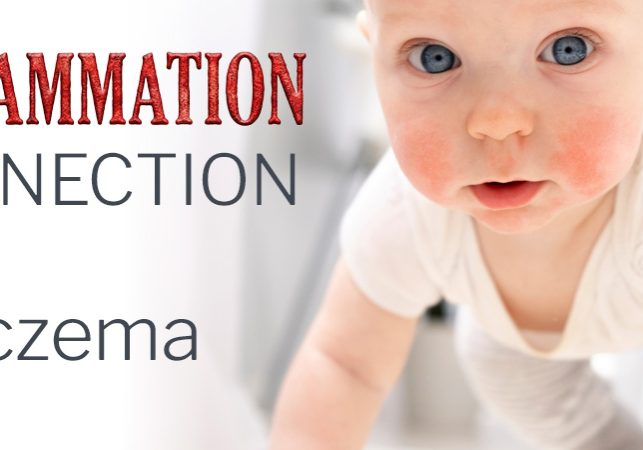
Eczema – The Inflammation Connection

Allergies don’t just cause temporary symptoms like sneezing or itchy eyes — they can also drive ongoing inflammation in different parts of the body. Over time, this immune response can influence conditions affecting the skin, airways, and other systems. In this series, The Inflammation Connection, we explore how allergic inflammation may play a role in several related conditions and why understanding the underlying immune response matters. In this article, we look at the connection between allergies and atopic dermatitis (eczema).
Allergic Link
Atopic dermatitis, also known as eczema, is a skin disease that can range from small patches of skin to severe, full body coverage. Symptoms include:
- Itchy, flaky skin
- Dry, thickened, cracked, inflamed areas of the skin
- Raw skin or bleeding from scratching
The symptoms start after being exposed to a problematic allergen – whether the allergen is inhaled, digested, or simply touched. The body interprets the allergen as harmful and responds by triggering inflammation and an irritating skin reaction.
Like with all allergic conditions, one reaction does not predict the next. While inhaling tree pollen may cause a small skin irritation one day, it doesn’t mean it won’t be severe with the next exposure. Determining what causes your eczema symptoms, and treating it at the root, is important to avoid long-term impacts.
Long-Term Impacts
The long-term impacts of eczema can be hyperpigmentation, skin infections, effects on sleep and mood, as well as the increased likelihood of comorbidities. The impact can also be particularly harsh for children. Eczema is often the first sign of allergy in infants, and it’s known to progress over time – a pattern called the atopic march.
The atopic march is a common pattern that shows infants with atopic dermatitis often go on to develop food allergies, allergic rhinitis, asthma, chronic ear infections, and other allergic conditions. In a way, eczema is often the first signal that the child has underlying allergies. Without early intervention, children can go on to deal with even more allergic issues as time goes on.
Treating the Cause
Treating the underlying allergy is key to stopping the allergic march, and to healing the skin barrier for people of all ages affected by atopic dermatitis. Providers at Allergy Associates of La Crosse (AAOL) treat patients from infants to grandparents by conducting a thorough history, exam, and allergy testing. With the results, they create a custom treatment plan that often includes allergy drop treatment to target the root cause of allergies.
Allergy drops are tailored to each patient and contain small amounts of the allergens they are allergic to – enough to help build tolerance, but not too much to cause reactions. Over the course of treatment, the amount of allergens are slowly and safely increased so the body learns to tolerate more of the allergen. The goal of treatment is to lower the total allergen load and reduce – or eliminate – symptoms, including those from atopic dermatitis.
Reach out to AAOL to schedule an appointment and see if allergy drop treatment is right for you.

Posted in Allergic Conditions, Pediatric Allergy, Uncategorized and tagged Allergies, Allergy Drops, Allergy Treatment, Eczema, Pediatric Allergy.