
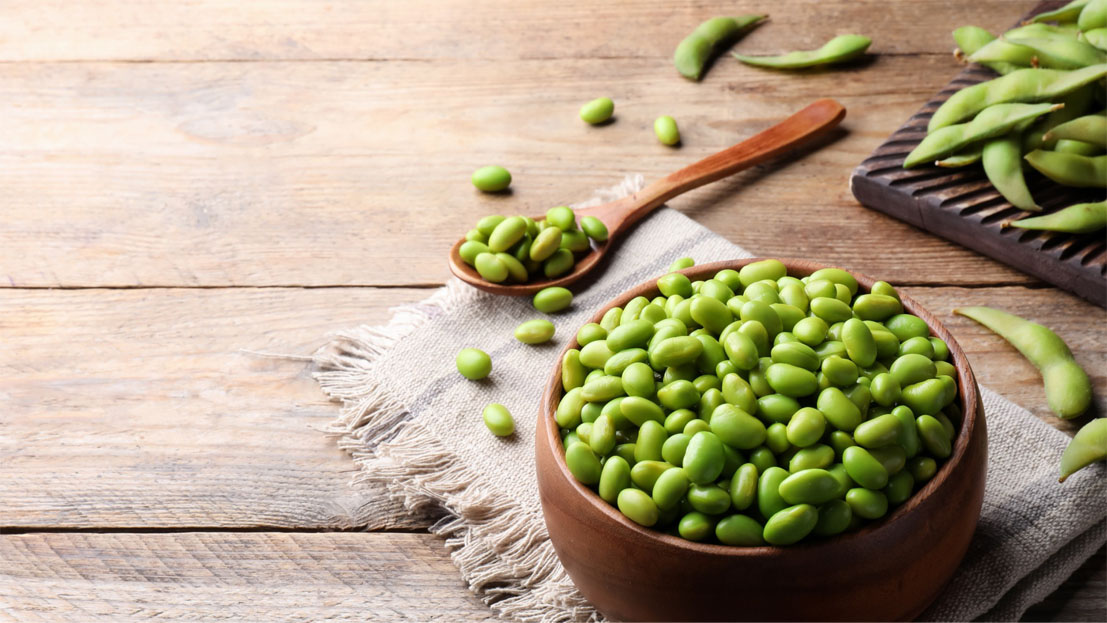
- Fun fact: Edamame originated in China more than 2,000 years ago.
- Edamame, a member of the botanical family Fabaceae, is the edible, fresh seed of the soybean plant.
- Edamame are harvested prior to ripening and eaten as a vegetable.
- The Fabaceae family contains beans and peas including garbanzo, green peas, kidney beans, lentils, and peanut to name a few.
- Other soy based products include soy milk, tofu, miso, soy sauce, tempeh, and textured soy protein.
- If you have a soy allergy, you should avoid soy-based products, including edamame.
Nutrition
1/2 cup of cooked edamame is an excellent source of folate, manganese, vitamin K, and vitamin A and a good source of fiber, copper, phosphorus, magnesium, thiamin, riboflavin, zinc and choline.
- Folate supports red blood cells formation and helps prevent birth defects.
- Manganese promotes wound healing and cartilage and bone formation.
- Vitamin K aids in strong bones and blood clotting mechanisms.
- Vitamin A benefits immune function, reproduction and vision.
- Fiber helps maintain bowel health and lower cholesterol levels.
- Copper promotes bone, collagen, and connective tissue formation.
- Phosphorus helps bone formation, hormone activation, and energy production.
- Magnesium regulates blood pressure and blood sugar.
- Thiamin supports nervous system function.
- Riboflavin helps to convert food into energy and aids in growth and development.
- Zinc promotes growth and development, along with immune and nervous system function.
- Choline supports brain development, liver function, muscle movement and normal metabolism.
How to Purchase, Prepare, and Store
- Purchase edamame frozen, year-round in grocery stores. Purchase fresh edamame pods at specialty grocers or the farmers market during the late summer months.
- Choose fresh edamame with plump pods and a fuzzy outer exterior. Avoid those that have wilted or turned brown.
- Edamame can be purchased in its pod or hulled without its pod.
- The pod is not edible due to its tough exterior. If the edamame is in the pod, remove the pod to eat.
- Prepare by boiling, steaming, or sautéing.
- Add to your favorite salads, soups, or create a delicious pureed dip.
- Edamame can be eaten warm or cold.
- Store cooked edamame in an airtight container in the refrigerator for up to 2 days. Cooked edamame can be frozen for 2-3 months in freezer bags.
Nutrition Facts
1/2 cup edamame, frozen, prepared
Calories: 94
Protein: 9.2 g
Fat: 4.03 g
Carbohydrate: 6.9 g
Fiber: 4.03 g
Sugars: 1.69 g
Calcium: 48.8 mg
Magnesium: 49.6 mg
Potassium: 338 mg
Vitamin C: 4.73 mg
Folate: 241 µg
Vitamin A: 11.6 IU
Vitamin K: 20.7 µg
Source: fdc.nal.usda.gov
Recipes
Request an Appointment
Success Stories

As printed in the La Crosse Tribune As a child, Lindsay Williams was often homebound. Williams had horrible allergies. Her bed and pillow were in a special plastic bag to keep the dust mites out. She had sinus surgery and took allergy shots, but nothing seemed to help her. “I’d get so sick every spring…
Read the rest of this story...