
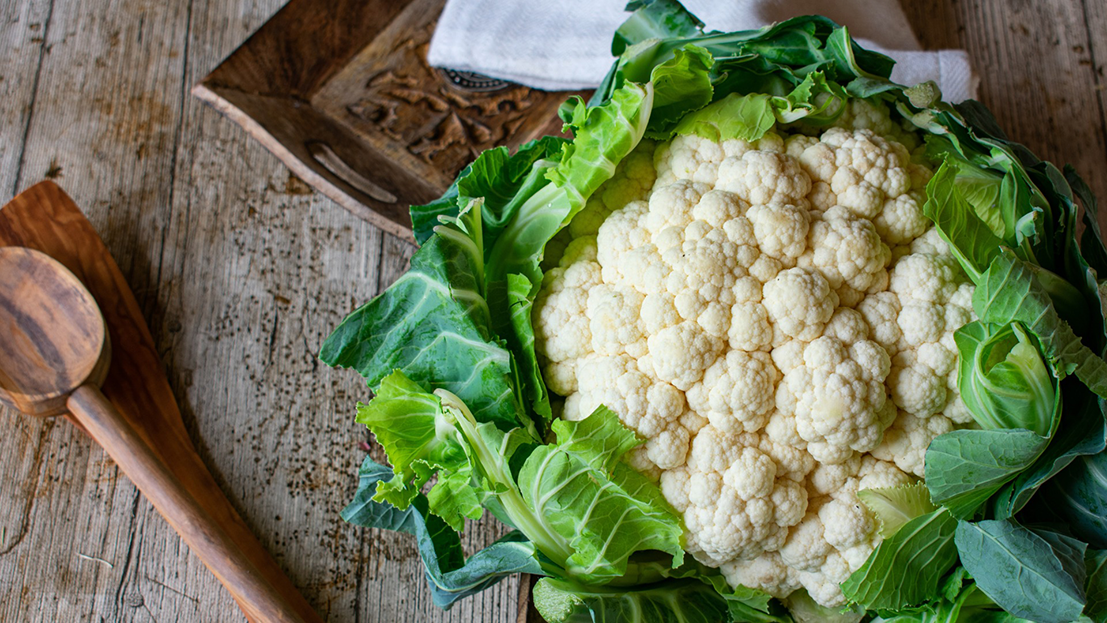
- Fun fact: The largest cauliflower ever grown weighed 60 pounds, 9.3 ounces and was grown in the United Kingdom.
- Cauliflower is part of the Brassicaceae botanical family otherwise known as the Cruciferae botanical family. This food family includes a wide variety of foods including broccoli, cabbage, kale, Brussel sprouts, collard greens, and turnip among others.
- Foods from the Brassicaceae family contain multiple antioxidants including glucosinolates which contribute to the strong smell of cooked cauliflower. These antioxidants may contribute to a reduction in cardiovascular disease and cancer.
Nutrition
1 cup of cauliflower is an excellent source of vitamin C and a good source of pantothenic acid (vitamin B5), folate, choline, and vitamin K.
- Vitamin C supports healthy bones and teeth, repair and maintenance of cartilage, wound healing, and increases absorption of iron.
- Pantothenic acid converts food into energy while supporting fat metabolism, hormone production, red blood cell formation and nervous system function.
- Folate is required to make DNA and other genetic material and thus is very important during pregnancy to reduce the risk of neural tube defects.
- Choline aids in brain development, liver function, muscle movement, never function and normal metabolism.
- Vitamin K supports blood clotting and strong bones.
How to Purchase, Prepare, and Store
- Purchase fresh or frozen cauliflower.
- Select fresh cauliflower with a creamy white color and compact clusters. The green leaves surrounding the base should be bright green. Avoid cauliflower heads that are discolored or contain brown spots.
- Check out your local farmers market to fine cauliflower varieties that are colored purple or green.
- Store fresh cauliflower in a plastic bag in the refrigerator for up to one week.
- Prepare cauliflower by steaming, boiling, sautéing, roasting, mashing, or ricing. Eat raw with your favorite dip. Lightly cook to retain the most nutrients in cauliflower.
Nutrition Facts
1/2 cup cauliflower, raw
- Calories: 13.4
- Protein: 1.02 g
- Fat: 0.15 g
- Carbohydrate: 2.66 g
- Fiber: 1.07 g
- Sugars: 1.02 g
- Calcium: 11.75 mg
- Magnesium: 8.0 mg
- Potassium: 160.0 mg
- Vitamin C: 25.8 mg
- Folate: 30.5 µg
- Vitamin A: 0 IU
- Vitamin K: 8.3 µg
1/2 cup cauliflower, cooked
- Calories: 59.5
- Protein: 1.14 g
- Fat: 0.27 g
- Carbohydrate: 2.55 g
- Fiber: 1.43 g
- Sugars: 1.29 g
- Calcium: 9.92 mg
- Magnesium: 5.58 mg
- Potassium: 88.0 mg
- Vitamin C: 27.5 mg
- Folate: 27.3 µg
- Vitamin A: 7.44 IU
- Vitamin K: 8.56 µg
Source: fdc.nal.usda.gov
Recipes
Request an Appointment
Success Stories

I was born with severe allergies. As an infant, I was allergic to most formulas, and as time when on the list of allergies only progressed. By the age of five I was covered head to toe in thick and scaly eczema. Parents would stare in the stores, and would not let their children around…
Read the rest of this story...