
Fun fact: There are over 10,000 varieties of tomatoes for culinary use.
Tomato is a member of the Solanaceae botanical family, more commonly known as the nightshade family. This botanical family also consists of potatoes, bell peppers, chili peppers, eggplant, ground cherries, and tomatillos.
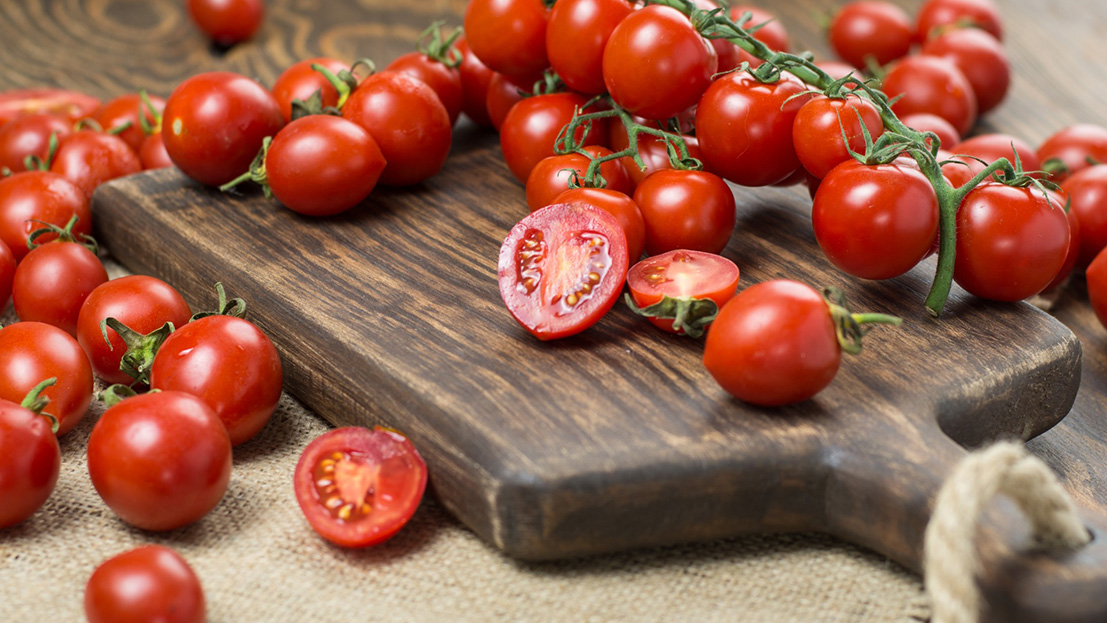
Tomatoes come in a variety of colors and sizes. A few common ones include grape tomatoes, cherry tomatoes, beefsteak tomatoes, roma tomatoes, heirloom tomatoes, and tomatoes on the vine.
Nutrition Information
Tomatoes are a good source of copper, vitamin K, manganese and vitamin B6. They are an excellent source of vitamin A and vitamin C.
- Copper aids in bone, collagen, and connective tissue formation, energy production, and nervous system function.
- Vitamin K supports blood clotting and bone building.
- Manganese assists the body in forming sex hormones, connective tissue, bones, and blood clotting factors. It is essential for normal brain and nerve function.
- Vitamin B6 converts food into energy and supports nervous system function and red blood cell formation.
- Vitamin A is involved in immune function, vision, and reproduction, and plays a significant role in the formation and maintenance of many organs including the heart, lungs and kidneys.
- Vitamin C helps to metabolize proteins while also supporting wound healing and iron absorption.
- Tomatoes also contain lycopene, an antioxidant that supports heart health and may help to prevent certain types of cancer.
Purchasing, Selecting, Storing, and Preparing
Summer through fall is the perfect time to try growing your own tomatoes or to visit your local farmer’s market where you will find a diverse variety of tomato options.
- Choose tomatoes that have smooth, shiny skin, and that are heavy for their size.
- Avoid tomatoes that are soft, have bruises or mold spots.
- Store ripe tomatoes on the countertop out of direct sunlight.
- Tomatoes will continue to ripen after harvest. If your tomatoes are not ripe, place them in a sunny window or add them to a brown paper bag with a banana to ripen.
- To prepare tomatoes, wash and then remove the core by cutting around the stem. Then, cut as desired for recipe by slicing, dicing, or quartering.
- Use tomatoes fresh in salads, salsas, on sandwiches, or just slice and enjoy.
- Cook tomatoes for sauces or add to your favorite dish.
- Tomatoes can also be preserved by freezing, canning, or dehydrating.
Nutrition Facts
Tomato, 1 cup raw
- Calories: 32.4
- Protein: 1.58 g
- Fat: 0.36 g
- Carbohydrate: 7.0 g
- Fiber: 2.16 g
- Sugars: 4.73 g
- Calcium: 18 mg
- Magnesium: 19.8 mg
- Potassium: 427 mg
- Vitamin C: 24.7 mg
- Folate: 27 µg
- Vitamin A: 75.6 IU
- Vitamin K: 14.2 µg
Via fdc.nal.usda.gov
Recipes
Request an Appointment
Success Stories