
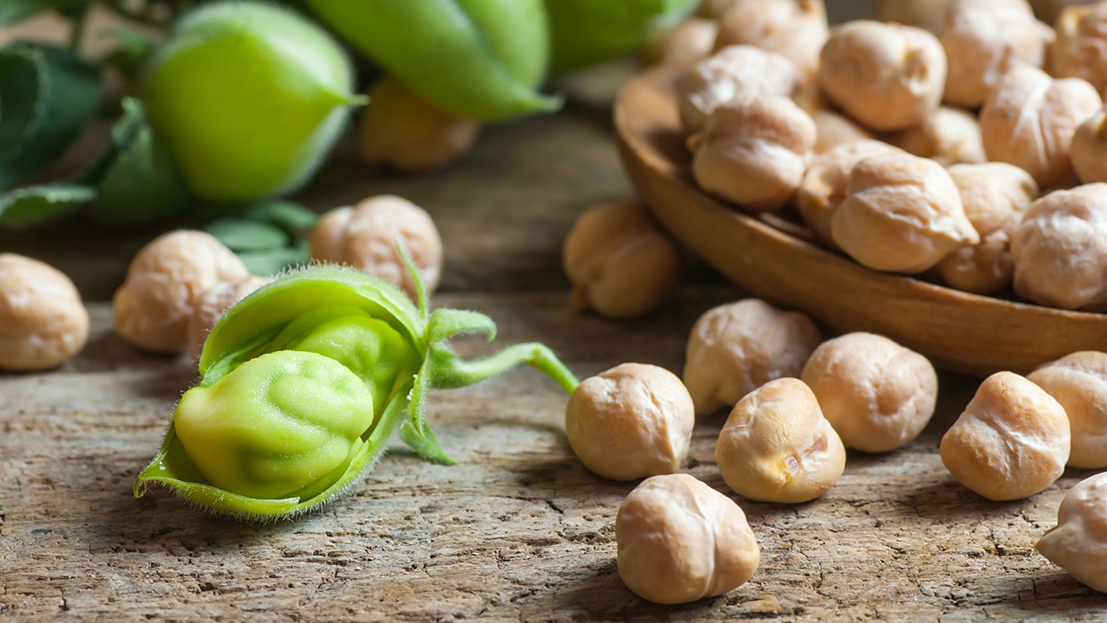
- Fun fact: Chickpeas have been cultivated for over 7,000 years.
- Chickpeas, also known as garbanzo beans, are a member of the Fabaceae botanical family which also includes other beans such as fava, kidney, lima, and pinto.
- The Fabaceae botanical family also consists of green peas, peanut, soybean, and alfalfa.
Nutrition
½ cup of chickpeas is an excellent source of fiber, folate, manganese and copper and a good source of protein, iron, zinc and phosphorus.
- Fiber improves digestive health and weight control while also protecting against colorectal cancer.
- Folate is needed to make DNA and other genetic material. Adequate folate intake reduces the risk of neural tube defects among pregnant women.
- Manganese aids the body in forming connective tissue and bones while it also assists with fat and carbohydrate metabolism, calcium absorption and blood sugar regulation.
- Copper supports bone formation, energy production and iron metabolism.
- Protein is the building blocks of bones, muscles, cartilage, skin and blood. It’s also essential for growth and development.
- Iron is required for growth and development, and it supports creation of red blood cells, hormones and connective tissue.
- Zinc benefits growth and development, immune function, reproduction and wound healing.
- Phosphorus supports formation of bones and teeth and is required to make protein for growth, maintenance and repair of cells and tissues.
How to Purchase, Prepare, and Store
- Purchase beans dried or canned at grocery stores.
- Select dried beans that have an outer skin that is smooth and plump, and avoid those that are shriveled, broken or contain tiny pinholes.
- Store dried beans in an airtight container in a cool, dry place for up to one year.
- Various methods exist for preparing dried beans. First, remove any debris such as rocks or other foreign objects. Rinse beans in a colander under cold water. Soak beans by placing them in a large pot and add five cups of water for every one cup of beans. Bring beans and water to a boil and continue to boil for 2-3 minutes. Remove beans from heat, cover and let sit for 4-24 hours.
- For a faster option, let beans sit for one hour after bringing to a boil. Drain beans and discard water. Rinse beans with fresh water. Place beans back in the pot, cover with fresh water and bring to a simmer over medium heat. As beans expand, continue to add warm water occasionally to keep beans fully covered. Stir regularly to prevent sticking. Simmer beans for 30 minutes to two hours or until tender. Chickpeas typically take 1 ½ hours, but the timing of other varieties of beans can vary.
- Add cooked beans to salads, soups or grain dishes. Consider pureeing and making a bean dip. Find additional bean recipes at beaninstitute.com.
Nutrition Facts
½ cup chickpeas, cooked & boiled
- Calories: 134.5
- Protein: 7.25 g
- Fat: 2.12 g
- Carbohydrate: 22.45 g
- Fiber: 6.25 g
- Sugars: 3.9 g
- Calcium: 40.2 mg
- Magnesium: 39.35 mg
- Potassium: 238.5 mg
- Vitamin C: 1.06 mg
- Folate: 141 µg
- Vitamin A: 22.15 IU
- Vitamin K: 3.29 µg
Source: fdc.nal.usda.gov
Recipes
Request an Appointment
Success Stories
“I had trouble with hay fever and seasonal allergies in the spring and summer for what I found out was typically grass and ragweed. So June and August were the worst times for me and over-the-counter medicines just weren’t doing it and mask it a little bit and then my eyes would swell up. “Now…
Read the rest of this story...