
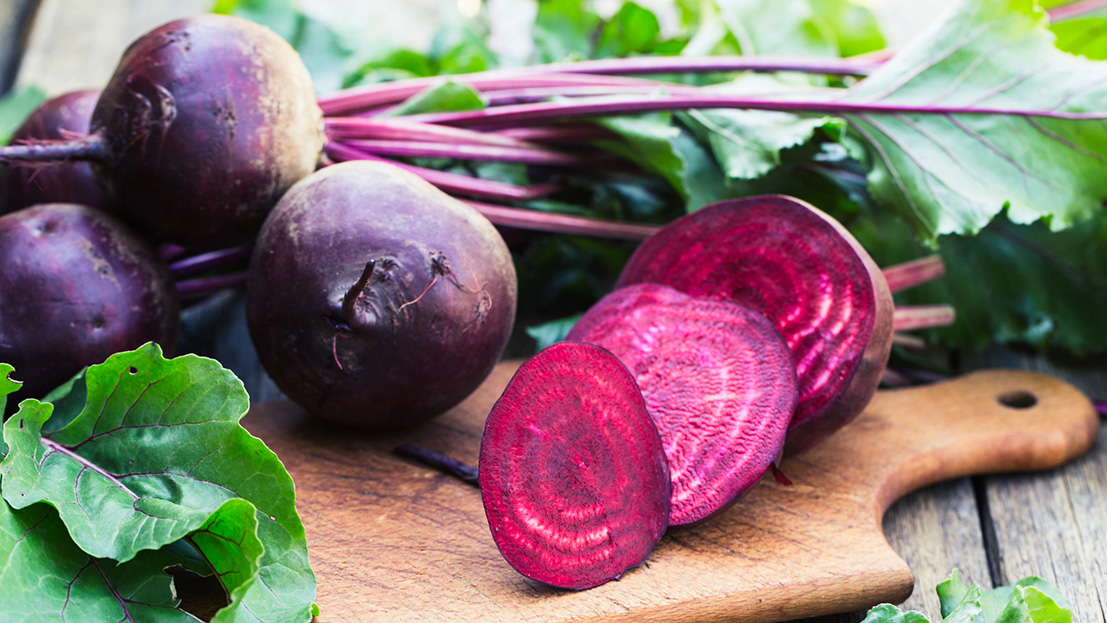
- Fun fact: Multiple varieties of beets are available including red, yellow or gold, and candy-cane striped colored Chioggia beets.
- Beets are a member of the Amaranthaceae family which also includes Swiss chard, spinach, quinoa, amaranth, and the sugar beet which is made into beet sugar.
- Both the beet root and beet greens are edible. Beet roots are starchy and sweet; beet greens have a bitter taste.
Nutrition
- ½ cup of cooked beet greens are an excellent source of copper, manganese, vitamin C, A and K and a good source of magnesium, potassium and riboflavin. ½ cup cooked beet root is a good source of manganese and selenium.
- Copper assists in bone, collagen and connective tissue formation as well as iron metabolism.
- Manganese supports wound healing and cartilage and bone formation.
- Vitamin C aids in the absorption of iron, is involved in wound healing, and assists in maintaining healthy bones and teeth.
- Vitamin A is involved in immune function, vision, and reproduction, and plays a role in normal formation and maintenance of the heart, lungs, and kidneys.
- Vitamin K promotes blood clotting and bone building.
- Magnesium regulates muscle and nerve function, blood sugar levels, and blood pressure control.
- Potassium supports communication of nerves and muscles and helps regulate fluid and mineral balance in the body.
- Riboflavin converts food into energy and supports growth and development.
- Selenium promotes immune and thyroid function and supports reproduction.
How to Purchase, Prepare, and Store
- Beets are available year round at grocery stores. They can be purchased fresh, canned, frozen, or pickled.
- Select beets which are small to medium sized, firm with smooth skin and a deep color. Avoid purchasing beets with scaly areas, and those that are soft or bruised.
- If consuming the beet greens, chose those with fresh, green leaves and avoid those which are wilted and spotted.
- To store, cut the greens from the beet root, leaving 2 inches of stem attached. Place unwashed beet roots in a plastic bag, removing as much air as possible, store in the refrigerator for up to three weeks.
- Store unwashed beet greens in a different plastic bag and refrigerate up to four days.
- Prepare by rinsing with cool water, then boil, steam, sauté, or shred raw for salads.
Nutrition Facts
1/2 cup beet root, cooked, boiled
- Calories: 156
- Protein: 1.43 g
- Fat: 0.15 g
- Carbohydrate: 8.47 g
- Fiber: 1.7 g
- Sugars: 6.77 g
- Calcium: 13.6 mg
- Magnesium: 19.6 mg
- Potassium: 259 mg
- Vitamin C: 3.06 mg
- Folate: 68 µg
- Vitamin A: 29.8 IU
- Vitamin K: 0.17 µg
1/2 cup beets greens, cooked
- Calories: 19.4
- Protein: 1.85 g
- Fat: 0.14 g
- Carbohydrate: 3.93 g
- Fiber: 2.09 g
- Sugars: 0.43 g
- Calcium: 82.1 mg
- Magnesium: 49 mg
- Potassium: 654 mg
- Vitamin C: 17.9 mg
- Folate: 10.1 µg
- Vitamin A: 5510 IU
- Vitamin K: 348 µg
Source: fdc.nal.usda.gov
Recipes
Request an Appointment
Success Stories

by mom Noreen I can never thank Allergy Associates of La Crosse and Dr. Mary Morris enough for the amazing lifestyle difference and peace you have brought my son, Nicholas, and my family. I recently came across a picture of Nicholas prior to sublingual immunotherapy treatment at Allergy Associates of La Crosse and was taken…
Read the rest of this story...