
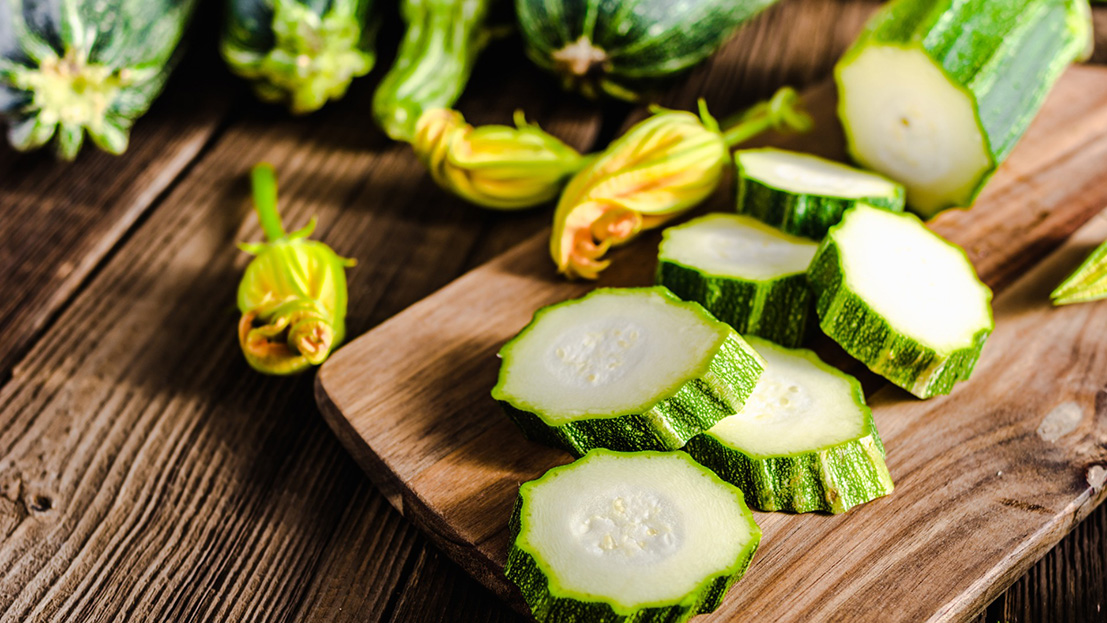
- Fun fact: A single zucchini plant can yield up to 10 lbs. of zucchini during the growing season.
- Zucchini belongs to the Cucurbitaceae botanical family, which also consists of squash, pumpkins and gourds.
- Zucchini varieties include different shapes and colors. There are zucchinis that are cylinder, rounded and scalloped. These may be light green, dark green, yellow and even white.
Nutrition
1 cup of cooked zucchini is an excellent source of vitamin C and a good source of vitamin B6, manganese, potassium, copper, vitamin A, folate, and pantothenic acid.
- Vitamin C aids in the absorption of iron, which helps to heal wounds and form scar tissue.
- Vitamin B6 is involved in protein metabolism as well as brain and immune function during pregnancy and infancy.
- Manganese helps the body to form connective tissue, bones, and blood clotting factors.
- Potassium assists blood pressure regulation, growth and development, heart function and muscle contraction.
- Copper benefits bone formation, collagen and connective tissue formation, energy production and iron metabolism.
- Vitamin A supports growth and development, immune function, reproduction and healthy vision.
- Folate aids in prevention of birth defects while supporting red blood cell formation and protein metabolism.
- Pantothenic acid converts food to energy and promotes fat metabolism, hormone production, red blood cell formation and nervous system function.
How to Purchase, Prepare, and Store
- Choose slender zucchinis that are heavy for their size with a smooth, shiny skin and a bright green or yellow color. Avoid zucchinis that have soft spots or blemishes.
- Zucchini can be eaten raw or cooked and is best when young and tender.
- Larger zucchinis become tough but can be used grated for baked goods such as zucchini bread – just scoop out the seeds prior to grating.
- Wash prior to preparing then steam, sauté, grill, spiralize, bake in your favorite dishes and add to salads.
- Store zucchini in a plastic bag in the refrigerator for up to one week, but it’s at its best
quality if eaten within 3 to 4 days.
Nutrition Facts
1 cup zucchini, sliced, cooked
- Calories: 27
- Protein: 1.4 g
- Fat: 0.64 g
- Carbohydrate: 4.84 g
- Fiber: 1.8 g
- Sugars: 3.08 g
- Calcium: 32.4 mg
- Magnesium: 34.2 mg
- Potassium: 475 mg
- Vitamin C: 23.2 mg
- Folate: 50.4 µg
- Vitamin A: 101 IU
- Vitamin K: 7.56 µg
Source: fdc.nal.usda.gov
Recipes
Request an Appointment
Success Stories

“So, before I came here I had chronic sinus infections. It was never colds, it was sinus infections. I would get over 8 a year; it was ridiculous amounts. “Once I started coming to Allergy Associates, because we were getting my allergies under control, I wasn’t getting so much post nasal drip. Everything was getting…
Read the rest of this story...