
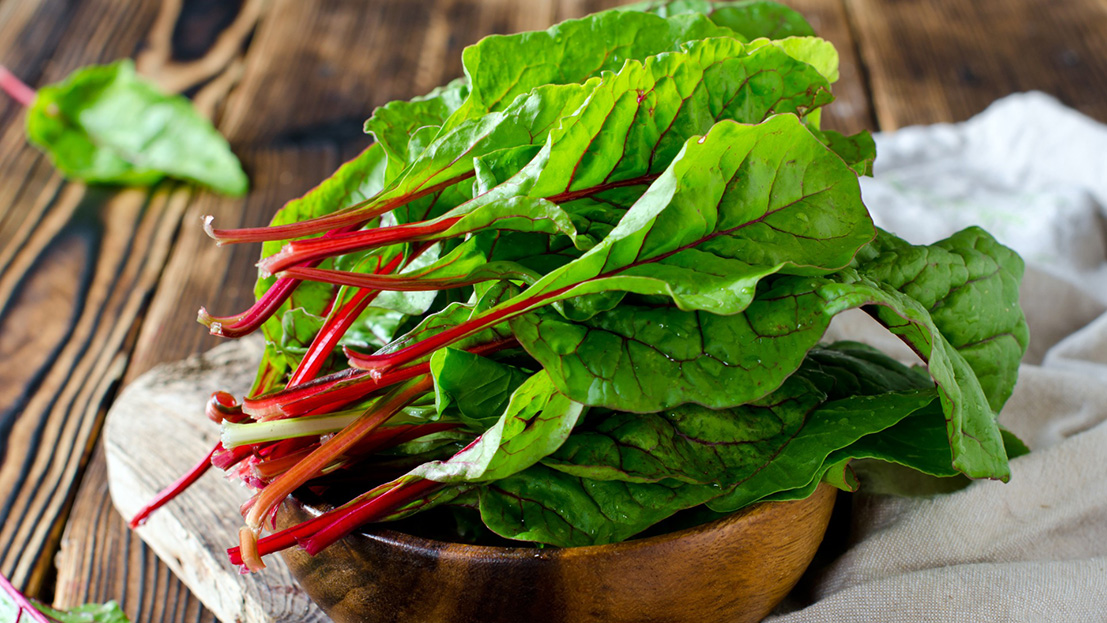
- Fun fact: Swiss chard originated in the Mediterranean region.
- Swiss chard is a member of the Amaranthaceae botanical family which also includes amaranth, beets, quinoa, spinach and sugar beets.
Nutrition
½ cup of cooked Swiss chard is an excellent source of vitamin A, vitamin K and vitamin C and a good source of magnesium, iron, potassium, copper, and manganese.
- Vitamin A plays a significant role in normal formation and maintenance of many organs including the heart, lungs and kidneys. It is also used to support immune function, vision and reproduction.
- Vitamin K assists with blood clotting and bone building.
- Vitamin C, an antioxidant, repairs and maintains bones, teeth and cartilage. It also plays a role in wound healing and aids in the absorption of iron.
- Magnesium contributes to the creation of protein, bone and DNA within the body while also regulating muscle and nerve function.
- Iron supports energy production, growth and development, wound healing and immune function.
- Potassium regulates blood pressure, fluid balance, and muscle contraction.
- Copper aids in bone formation, collagen and connective tissue formation and iron metabolism.
- Manganese promotes carbohydrate, protein and cholesterol metabolism along with wound healing.
How to Purchase, Prepare, and Store
- Purchase chard in the grocery store year round or at the farmer’s market during the summer months. It can be purchased fresh or frozen.
- Select chard with crinkly, crisp leaves. Avoid chard with wilted or yellowish leaves.
- Chard can be found in a variety of stem colors including red to pink, yellow, and white. Chard leaves are green, but the colored stem will extend up the entire leaf.
- Store leaves, unwashed, in a plastic bag. Keep in the crisper for up to one week.
- Prepare chard by rinsing well to remove any dirt. Then steam, sauté or boil chard leaves or stems. Chard leaves can also be eaten raw; the smaller the leaves the more tender. Larger leaves will be more fibrous. The stems tend to be tougher than the leaf, so a longer cooking time will be required for stems compared to leaves.
Nutrition Facts
1 cup chopped chard, cooked, boiled
- Calories: 35
- Protein: 3.29 g
- Fat: 0.14 g
- Carbohydrate: 7.23 g
- Fiber: 3.68 g
- Sugars: 1.92 g
- Calcium: 102 mg
- Magnesium: 150 mg
- Potassium: 961 mg
- Vitamin C: 31.5mg
- Folate: 15.8 µg
- Vitamin A: 10700 IU
- Vitamin K: 572 µg
Source: fdc.nal.usda.gov
Recipes
Request an Appointment
Success Stories

as told by mom, Cindy Our oldest son, Preston was diagnosed with severe food (milk, egg, banana, peanut, tree nuts, shellfish) and environmental (outdoor molds, outdoor pollens, dust mites, dogs, cats) allergies at one year of age. After eliminating these allergens from his diet and surroundings, the levels continued to grow in number and the…
Read the rest of this story...