
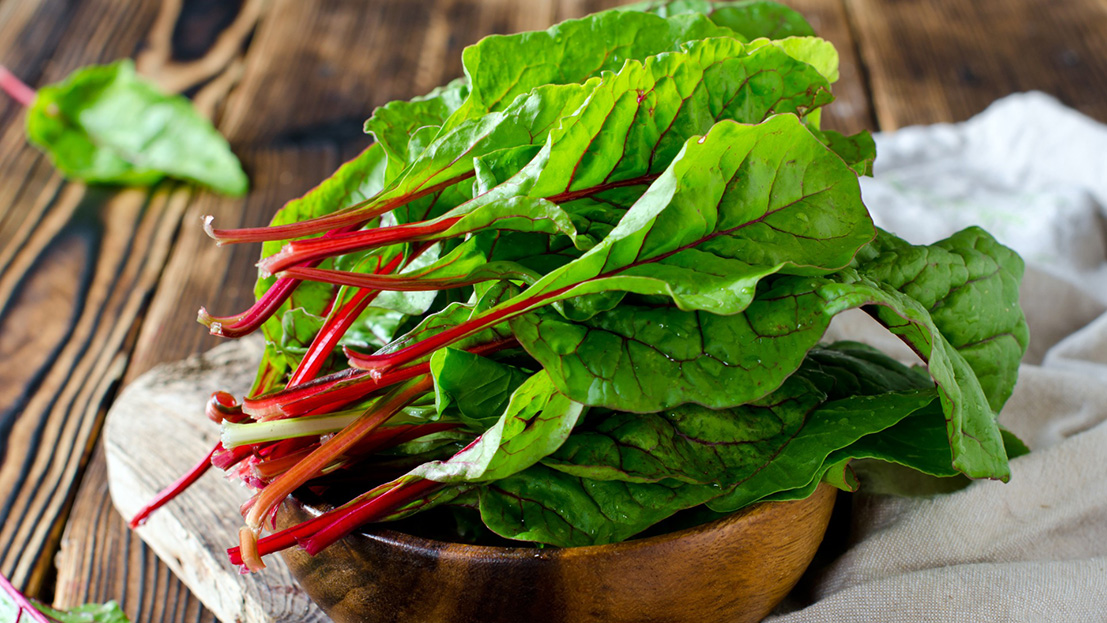
- Fun fact: Swiss chard originated in the Mediterranean region.
- Swiss chard is a member of the Amaranthaceae botanical family which also includes amaranth, beets, quinoa, spinach and sugar beets.
Nutrition
½ cup of cooked Swiss chard is an excellent source of vitamin A, vitamin K and vitamin C and a good source of magnesium, iron, potassium, copper, and manganese.
- Vitamin A plays a significant role in normal formation and maintenance of many organs including the heart, lungs and kidneys. It is also used to support immune function, vision and reproduction.
- Vitamin K assists with blood clotting and bone building.
- Vitamin C, an antioxidant, repairs and maintains bones, teeth and cartilage. It also plays a role in wound healing and aids in the absorption of iron.
- Magnesium contributes to the creation of protein, bone and DNA within the body while also regulating muscle and nerve function.
- Iron supports energy production, growth and development, wound healing and immune function.
- Potassium regulates blood pressure, fluid balance, and muscle contraction.
- Copper aids in bone formation, collagen and connective tissue formation and iron metabolism.
- Manganese promotes carbohydrate, protein and cholesterol metabolism along with wound healing.
How to Purchase, Prepare, and Store
- Purchase chard in the grocery store year round or at the farmer’s market during the summer months. It can be purchased fresh or frozen.
- Select chard with crinkly, crisp leaves. Avoid chard with wilted or yellowish leaves.
- Chard can be found in a variety of stem colors including red to pink, yellow, and white. Chard leaves are green, but the colored stem will extend up the entire leaf.
- Store leaves, unwashed, in a plastic bag. Keep in the crisper for up to one week.
- Prepare chard by rinsing well to remove any dirt. Then steam, sauté or boil chard leaves or stems. Chard leaves can also be eaten raw; the smaller the leaves the more tender. Larger leaves will be more fibrous. The stems tend to be tougher than the leaf, so a longer cooking time will be required for stems compared to leaves.
Nutrition Facts
1 cup chopped chard, cooked, boiled
- Calories: 35
- Protein: 3.29 g
- Fat: 0.14 g
- Carbohydrate: 7.23 g
- Fiber: 3.68 g
- Sugars: 1.92 g
- Calcium: 102 mg
- Magnesium: 150 mg
- Potassium: 961 mg
- Vitamin C: 31.5mg
- Folate: 15.8 µg
- Vitamin A: 10700 IU
- Vitamin K: 572 µg
Source: fdc.nal.usda.gov
Recipes
Request an Appointment
Success Stories

by mom Noreen I can never thank Allergy Associates of La Crosse and Dr. Mary Morris enough for the amazing lifestyle difference and peace you have brought my son, Nicholas, and my family. I recently came across a picture of Nicholas prior to sublingual immunotherapy treatment at Allergy Associates of La Crosse and was taken…
Read the rest of this story...