
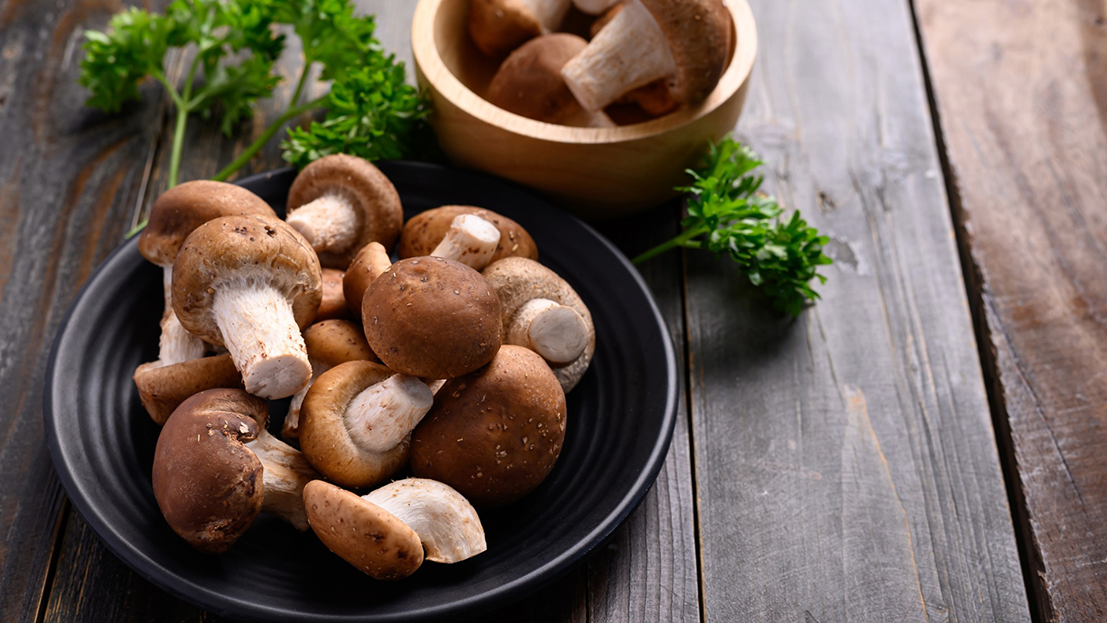
- Fun fact: Shiitake is the second most eaten mushroom in the world.
- Shiitake mushrooms are part of the Polyporaceae fungi family.
- Shiitakes are indigenous to East Asia and grow on decomposing hardwood trees. They can also be cultivated on hardwood logs or in a sawdust substrate.
Nutrition
Shiitake mushroom is an excellent source of copper and selenium and a good source of zinc, riboflavin and pantothenic acid (B5).
- Copper promotes bone, collagen, and connective tissue formation along with energy production and iron metabolism.
- Selenium supports the immune system, reproduction and thyroid function.
- Zinc aids in growth and development, reproduction, wound healing and nervous system function.
- Riboflavin converts food into energy and promotes growth and development and red blood cell formation.
- Pantothenic acid (B5) converts food into energy while assisting in hormone production, red blood cell formation and nervous system function.
How to Purchase, Prepare, and Store
- Purchase shiitake mushrooms year-round in grocery stores. Shiitakes can be purchased fresh and dried.
- Avoid purchasing mushrooms that are bruised, slimy, discolored or have an “off” smell.
- To store, wrap the mushrooms, unwashed, in paper towels to absorb moisture, then place them in a brown paper bag in the refrigerator for up to one week. Alternatively, freeze in a plastic freezer bag for long term use.
- To clean, use a damp paper towel to remove any dirt or dip in water briefly to wash, then dry by patting with a clean towel.
- To prepare dried shiitakes, place mushrooms in a bowl, covered with room temperature water. Let soak overnight or for a minimum of 6-8 hours. Drain water and use as directed in your recipe.
- Shiitakes can be sauteed, roasted, grilled, and added to soups or stews.
- Do not eat shiitake mushrooms raw. They must be cooked prior to eating or they may cause an allergic reaction in some people.
Nutrition Facts
½ cup shiitake mushroom, cooked
- Calories: 40.6
- Protein: 1.13 g
- Fat: 0.15 g
- Carbohydrate: 10.4 g
- Fiber: 1.52 g
- Sugars: 2.78 g
- Calcium: 2.17 mg
- Magnesium: 10.15 mg
- Potassium: 85 mg
- Vitamin C: 0.21 mg
- Folate: 15.2 µg
- Vitamin A: 0 IU
- Vitamin K: 0 µg
Source: fdc.nal.usda.gov
Recipes
Request an Appointment
Success Stories
I “developed” allergies the first year I went to college. Before the change in environment, I never noticed allergies or they never impacted my quality of life. Upon moving to La Crosse, I noticed for the first time that I didn’t feel well in the late summer and early fall. I wasn’t sure what it…
Read the rest of this story...