
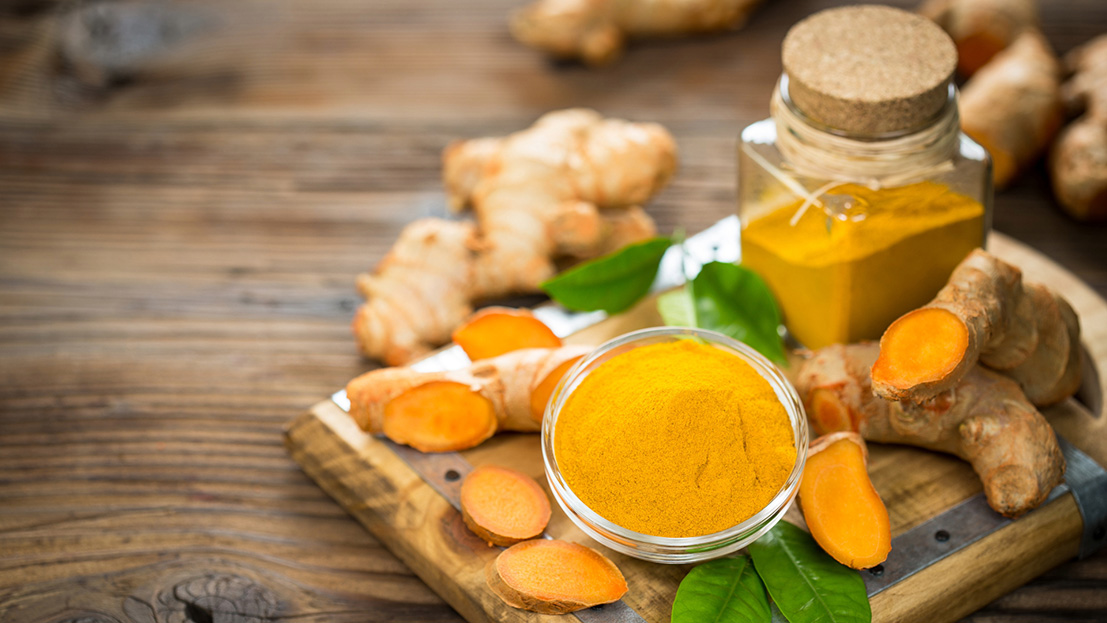
- Fun fact: Turmeric can be used as a natural dye to color fabric and food.
- Turmeric is a member of the Zingiberaceae botanical family which also includes ginger and cardamom.
- Turmeric is a common ingredient in curry seasonings and has a bright orange to yellow color.
- The turmeric rhizome, or root, is the part used in cooking and looks similar to fresh ginger root.
Nutrition
- One teaspoon of turmeric power is an excellent source of manganese.
- Manganese plays a role in fat and carbohydrate metabolism, calcium absorption and blood sugar regulation. It’s also essential for normal brain and nerve function.
- Turmeric contains curcuminoids, which give turmeric many of its favorable properties. Curcumin, the main curcuminoid, has antioxidant and anti-inflammatory benefits. Emerging research suggests curcumin may be useful in many inflammatory conditions including metabolic syndrome, arthritis and anxiety.
- The curcumin in turmeric is not well absorbed. Increase absorption of turmeric by combining black pepper in your recipes with turmeric.
How to Purchase, Prepare, and Store
- Purchase turmeric dried, fresh or in supplements.
- Dried turmeric can be found in the spice aisle of the most grocery stores and fresh turmeric can be purchased at health food stores and Indian or Asian markets.
- If you are considering using a turmeric supplement, speak with your physician to ensure it is right for you as some contraindications exist.
- Select fresh turmeric that is firm. Avoid rhizomes that are soft, dried or shriveled. Store in the refrigerator wrapped in a paper towel and placed in an unsealed plastic bag. Turmeric should last for 1-2 weeks in the refrigerator.
- Prepare by peeling off the skin of the root and prepare as recommended. Turmeric is easily grated using a grater or can be diced into coins or matchsticks using a knife.
- Select dried turmeric with a vibrant color. Store away from direct sunlight, in a cool dark place.
- Use fresh or dried turmeric as an addition to smoothies, teas, dressings or as a seasoning in your favorite protein, grain, soup, or salad dishes. The possibilities are endless.
- Use caution when preparing turmeric as it easily stains hands, clothing and countertops.
Nutrition Facts
1 tsp. dried turmeric, ground
Calories: 9
Protein: 0.29 g
Fat: 0.10 g
Carbohydrate: 2.01 g
Fiber: 0.68 g
Sugars: 0.09 g
Calcium: 5.0 mg
Magnesium: 6.2 mg
Potassium: 62.4 mg
Vitamin C: 0.02 mg
Folate: 0.6 µg
Vitamin A: 0 IU
Vitamin K: 0 µg
Source: fdc.nal.usda.gov
Recipes
Orange-Carrot Turmeric Ginger Shots
Pineapple Ginger Turmeric Shots
Request an Appointment
Success Stories

“What brought me here was a lifetime of discomfort; somewhat in the spring. But in the late summer and fall I would lose, for practical purposes, 10-13 weeks of my life because I was so compromised. “Now, not so much. Really, not at all. I’ve gotten to the point where I’m at maintenance level with…
Read the rest of this story...